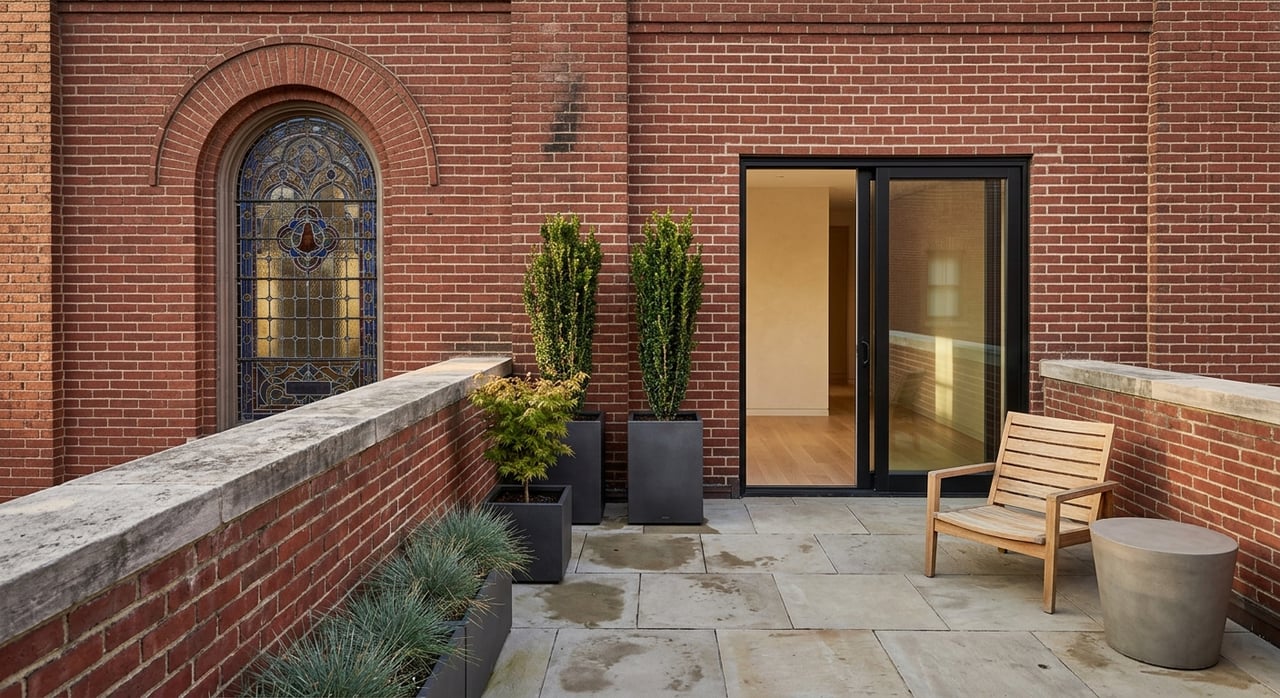
If you love homes with real character, a standard condo can feel forgettable fast. Buying an adaptive reuse condo in Wesley Heights gives you something very different: historic architecture, modern living, and a location with strong city access. It also comes with a few extra layers to understand before you buy, from HOA documents to preservation rules. Let’s dive in.
Why Wesley Heights Makes Sense
Wesley Heights is a natural fit for adaptive reuse because the neighborhood already has a strong architectural identity. The City of Charlotte describes it as a 1920s neighborhood that still retains much of its streetcar-era character, and the National Register inventory notes its mature trees, original retaining walls, and early-20th-century residential pattern.
You are also close to Uptown. Wesley Heights sits about a mile northwest of Uptown, and the CityLYNX Gold Line includes a Wesley Heights stop, which adds another layer of urban convenience for buyers who want a connected location without a typical suburban condo setting.
That mix of history and access is part of the appeal. In a neighborhood like this, an adaptive reuse residence can feel more in step with the surroundings than a more generic building would.
What Adaptive Reuse Really Means
Adaptive reuse means an older building has been converted for a new purpose while preserving the features that give it historic character. In practical terms, that often means keeping elements like stained glass, masonry, wood ceilings, and original architectural forms while updating systems for modern living.
That balance is the heart of the buying decision. You are not just choosing a floor plan or finish package. You are choosing a home shaped by an existing structure, which often creates more distinctive layouts and details than new construction.
A local example is The Arches at 201 Grandin Road, a former Romanesque Revival church originally designed in the 1920s by Charlotte architect Louis Asbury and redeveloped into condos. Reporting on the project noted preserved stained-glass windows and rooftop terraces, along with varied layouts created from the original church shell.
Expect Less Uniform Floor Plans
One of the biggest differences in an adaptive reuse condo is layout variety. In a converted building, homes are often shaped by the original structure rather than repeated from a standard template.
That can be a major plus if you want something rare and design-forward. It can also mean you need to look more closely at room dimensions, window placement, storage, stair configuration, and outdoor access to make sure the home fits your daily life.
If you are comparing several residences, avoid assuming one unit will function like the next. In a boutique historic conversion, each residence may have meaningful differences in flow, ceiling lines, natural light, and usable outdoor space.
Understand Unit Boundaries First
Before you fall in love with a stained-glass window or terrace, make sure you understand what you actually own. In North Carolina condos, the declaration controls what counts as part of the unit, what is a common element, and what is a limited common element.
Under North Carolina law, finished interior surfaces are part of the unit. Structural portions shared by more than one unit are common elements. Features such as balconies, porches, patios, and exterior doors and windows that serve one unit but sit outside the unit boundary are often limited common elements allocated exclusively to that unit.
That distinction matters because use and maintenance are not always the same thing. A feature may feel private, but the declaration may assign repair responsibility to the association, the owner, or both in different ways.
Ask Who Maintains What
In an adaptive reuse condo, visible features can be some of the most important items to clarify. Exterior doors, historic windows, terraces, roofing areas, masonry, and waterproofing are not small details in a historic building.
You should ask direct questions such as:
- What is part of the unit?
- What is a common element?
- What is a limited common element?
- Who maintains windows, exterior doors, patios, balconies, or rooftop terrace areas?
- Who is responsible for repairs if a water issue starts at the building envelope?
These answers should come from the condo declaration and related association documents, not assumptions. This is especially important in a building where preserved materials and custom architecture are part of the value.
Historic District Rules Matter
Wesley Heights is a Charlotte Local Historic District, and that affects exterior changes. The City of Charlotte requires Historic District Commission permission and a Certificate of Appropriateness before work begins on exterior changes such as windows, doors, fencing, and tree removal.
For you as a buyer, that means future exterior modifications may be limited by two separate layers. First, the condo declaration and HOA rules may control what is allowed. Second, local historic district review may apply before work can begin.
This does not mean ownership is difficult. It means exterior changes should be approached thoughtfully, especially in a building where original design features are part of the reason buyers are drawn to it.
Look Closely at Preserved Features
Historic character is often the reason buyers choose adaptive reuse in the first place. It is also why you should pay attention to the condition and repair history of preserved features.
For elements like historic windows or stained glass, National Park Service guidance says repair is generally the first option to consider. When replacement is necessary, the new feature should match the old design and visual qualities.
That makes due diligence important. Ask about the condition, prior repairs, and maintenance approach for stained glass, frames, masonry, waterproofing, and any other character-defining materials that could affect both cost and long-term care.
Review the HOA Financial Picture
A beautiful building still needs a solid operating plan. North Carolina condo associations must keep financial records and make an annual income and expense statement and balance sheet available to unit owners within 75 days after the close of the fiscal year.
For buyers, HOA review should go beyond the monthly dues amount. You want to understand whether the association appears prepared for the real costs of maintaining a distinctive building over time.
A strong document review often includes:
- Current budget
- Balance sheet
- Reserve information
- Recent board minutes
- Pending or planned capital projects
- Any active or proposed special assessments
Reserve adequacy is especially important. North Carolina law requires reserve amounts to be disclosed in certain condo documents, but it does not set a single minimum reserve formula, so you will need to evaluate whether funding appears realistic for future repairs and replacements.
Pay Attention to Big-Ticket Repairs
In a historic conversion, the biggest financial questions usually involve the building envelope and major systems. That includes roofing, windows, masonry, waterproofing, HVAC, electrical components, elevators if present, and parking-related structures if applicable.
These are not abstract concerns. If a project has critical repairs or significant deferred maintenance, it can affect both ownership costs and financing options.
Ask whether the HOA has a current reserve study, when it was last updated, and whether reserves appear to account for likely long-term needs. In a distinctive building, preservation and maintenance often go hand in hand.
Confirm Insurance Before Closing
Insurance is another area where condo buyers should slow down and read carefully. Under North Carolina law, the association must maintain property insurance on the common elements at not less than 80% of replacement cost, along with reasonable liability insurance.
In horizontal-boundary buildings, the common-elements policy should include the units to the extent reasonably available, but it does not have to include owner-installed improvements and betterments. That is why you should confirm exactly where the master policy stops and where your own HO-6 policy needs to begin.
You will want clear answers to questions like:
- What does the master policy cover?
- What is excluded?
- What deductible applies?
- Are interior upgrades covered?
- What personal policy coverage is recommended based on the project documents?
Watch for Financing Red Flags
Financing a condo is not only about your personal approval. Your lender may also need to approve the project itself.
Fannie Mae says condo projects may be ineligible in situations that include hotel-like operation, short-term rental pooling, too much commercial or mixed-use space, significant litigation, or critical repairs and deferred maintenance. Fannie Mae and Freddie Mac also apply a 35% ceiling on commercial or mixed-use space in the project or building containing it.
That is why it helps to request project documents early. Lenders may review board minutes, engineer reports, structural or mechanical inspection reports, reserve studies, repair lists, and special-assessment information when evaluating project eligibility.
Questions to Ask Early
If you are serious about buying an adaptive reuse condo in Wesley Heights, ask for clarity early in the process. Waiting until the end of due diligence can create avoidable stress.
Here are some smart questions to bring into your review:
- What parts of the building are unit, common element, or limited common element?
- Who maintains exterior windows, doors, terraces, patios, or balconies?
- Are there pending or planned special assessments?
- Does the HOA have a current reserve study?
- What major capital work is expected in the next few years?
- What does the master insurance policy cover?
- Are there rental restrictions or short-term rental rules?
- Are there pending lawsuits, water intrusion issues, or structural or mechanical reports affecting the project?
These questions help you move past surface-level appeal and understand the ownership experience more clearly.
Why the Right Guidance Matters
Buying an adaptive reuse condo is often more nuanced than buying a conventional unit. You are weighing architecture, preservation, HOA structure, insurance, maintenance planning, and lender standards all at once.
That is not a reason to avoid these homes. It is a reason to buy with care. When the documents, finances, and building condition align, a historic conversion can offer a level of design character and scarcity that is hard to find elsewhere in Charlotte.
If you are exploring boutique condo living in Wesley Heights and want a clearer view of the details that matter, connect with the team behind The Arches - Development Website.
FAQs
What makes an adaptive reuse condo in Wesley Heights different from a standard new condo?
- An adaptive reuse condo is created from an older building that has been converted for residential use while preserving historic features, so you may see more architectural character, less uniform floor plans, and added importance around maintenance and preservation rules.
What should buyers in Wesley Heights know about condo unit boundaries?
- In North Carolina, the condo declaration defines what is part of the unit, what is a common element, and what is a limited common element, so you should verify ownership and maintenance responsibility for windows, doors, patios, balconies, and terraces.
What exterior changes require approval in the Wesley Heights Historic District?
- In Charlotte’s Wesley Heights Local Historic District, exterior changes such as windows, doors, fencing, and tree removal require Historic District Commission permission and a Certificate of Appropriateness before work begins.
What HOA documents should buyers review for a Wesley Heights adaptive reuse condo?
- You should review the declaration, budget, balance sheet, reserve information, board minutes, insurance details, and any documents related to special assessments, major repairs, or planned capital projects.
What financing issues can affect an adaptive reuse condo purchase in Wesley Heights?
- Condo financing can be affected by factors such as significant deferred maintenance, critical repairs, litigation, hotel-like operations, short-term rental pooling, or too much commercial space in the project.
What insurance questions matter when buying a condo in North Carolina?
- You should confirm what the HOA master policy covers, what it excludes, what deductible applies, and where your personal HO-6 policy needs to fill gaps, especially for owner improvements and interior contents.