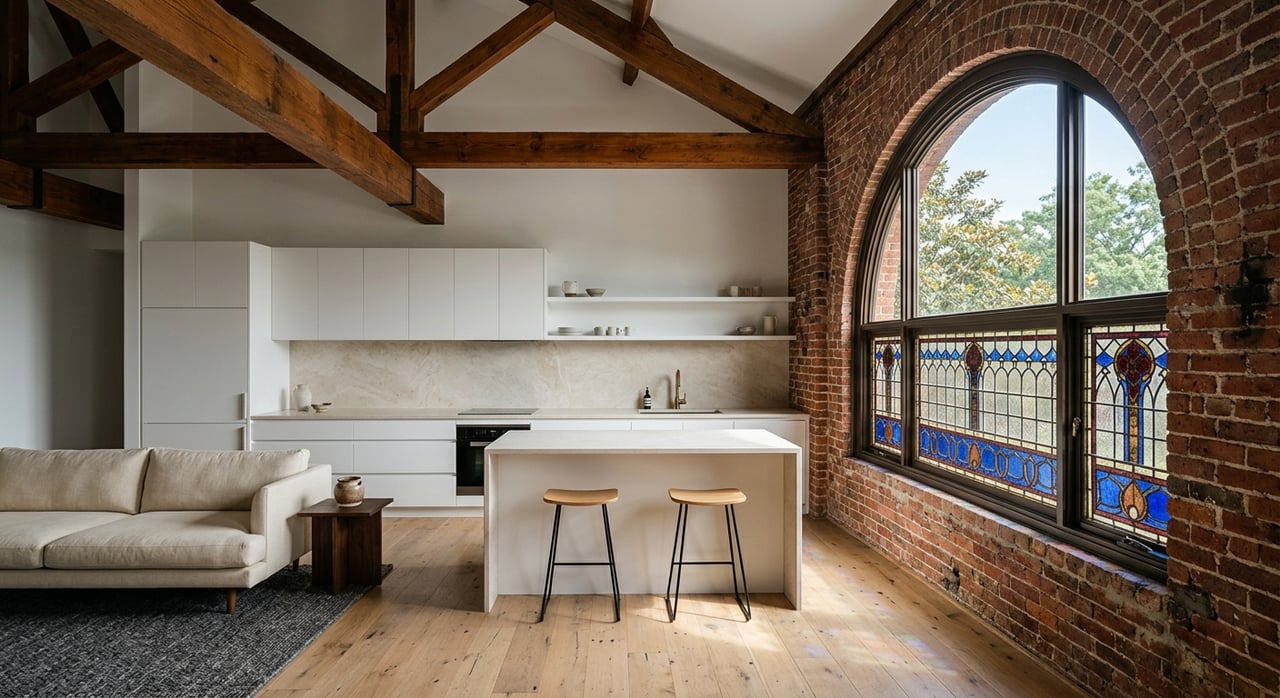
Looking for a condo that feels like it has a past, not just a floor plan? In Wesley Heights, adaptive reuse is helping shape a different kind of residential experience, one that blends historic architecture with modern living in a neighborhood already defined by character. If you are exploring condos in this part of Charlotte, it helps to understand how preservation, design, and location all come together here. Let’s dive in.
Adaptive Reuse in Wesley Heights
Adaptive reuse means giving an existing building a new purpose instead of starting from the ground up. In Charlotte, that often means preserving meaningful architecture while updating interiors for how people live today.
In Wesley Heights, that idea carries extra weight because the neighborhood is one of Charlotte’s historic districts. The area developed largely in the 1920s, retains much of its streetcar-era look, and is known for bungalow-style homes and tree-canopied streets about a mile northwest of Uptown.
That historic setting shapes what new residential opportunities can look like. Rather than erase the neighborhood’s architectural story, adaptive reuse can keep visible pieces of the past while introducing homes that fit current needs.
Why Wesley Heights Fits Reuse
Wesley Heights already has a strong architectural identity. The district’s development was concentrated from 1922 to 1929, and its streetscape still reflects that early twentieth-century pattern.
Most of the neighborhood is residential in character. Historic records note that the district’s main exceptions were two churches on Grandin Road, which helps explain why a church conversion stands out while still feeling rooted in the area.
That balance matters if you want a home with personality. In a neighborhood where Bungalow/Craftsman homes are most common, along with Colonial Revival and Tudor Revival examples, an adaptive-reuse condo can feel distinct without seeming out of place.
Historic District Rules Matter
Adaptive reuse in Wesley Heights does not happen in a vacuum. In Charlotte’s local historic districts, exterior changes require approval through a Certificate of Appropriateness before work begins.
For buyers, that preservation framework is important. It means reuse projects are shaped by standards intended to protect the district’s visual character rather than ignore it.
That can add confidence to the broader setting around your home. When you buy in a historic district, you are not only buying a residence. You are also buying into a streetscape with rules designed to help maintain architectural continuity.
The Arches as a Local Example
The clearest example of adaptive reuse shaping Wesley Heights condos is The Arches at 201 Grandin Road. The former church, designed in 1927 by Louis Asbury, was officially redeveloped into condos by March 2024.
The building carries real architectural significance. Mecklenburg County identifies Louis H. Asbury, Sr. as North Carolina’s first native-born professionally trained architect, and his work includes major Charlotte landmarks.
At The Arches, the redevelopment preserved original stained-glass windows, arched woodwork ceilings, and interior brick walls while introducing modern kitchens and baths. That combination shows what many buyers are looking for in adaptive reuse: historic features you can actually live with, not just admire from a distance.
Architecture Shapes the Condo Experience
One reason this kind of project resonates is the architecture itself. The church at 201 Grandin is described in the Wesley Heights inventory as Romanesque Revival, with arched windows, cast-stone trim, crenellations, pilasters, and corbelling.
Those details give the building a visual depth that is hard to replicate in conventional new construction. Round arches and heavy masonry already create a strong sense of permanence, which makes the building well suited for a residential conversion with presence.
For you as a buyer, that can translate into a home that feels more memorable from the moment you arrive. Instead of generic corridors and standard exterior styling, the architecture becomes part of daily life.
Modern Living Inside Historic Walls
Adaptive reuse works best when the design does more than preserve a shell. It has to make the home function well for present-day living.
Current project materials for The Arches highlight features such as quartz counters, designer tile, EV charging, on-site parking, rooftop terraces, and city-skyline views in select residences. Those details matter because they show how a historic structure can support the expectations many condo buyers bring today.
That is one of the biggest reasons adaptive reuse is shaping the condo conversation in Wesley Heights. You do not have to choose between architectural character and practical comfort when the project is executed thoughtfully.
Why Buyers Are Paying Attention
For many buyers, adaptive-reuse condos answer a specific frustration. A lot of new inventory can feel polished but interchangeable, especially if you want a home with distinct materials, design interest, and a stronger sense of place.
In Wesley Heights, reuse offers a different proposition. You can find a residence tied to a restored Charlotte landmark while staying close to Uptown and connected to the city’s broader urban lifestyle.
The location story adds to the appeal. Project materials position The Arches near Uptown, South End, greenways, the trolley station, and stadiums, which supports the idea that condo living here is not just about architecture. It is also about access and ease.
Scarcity Adds Value
Adaptive-reuse condo projects are not easy to duplicate. They depend on the right building, the right approvals, and a design approach that respects the original structure.
That makes this kind of inventory naturally limited. In practical terms, if you are considering a condo in Wesley Heights, a reuse project may offer a level of rarity that standard development cannot match.
That scarcity is part of the draw for design-conscious buyers, move-down buyers, and relocators alike. A home with preserved stained glass, wood-vaulted ceilings, and historic masonry is simply a different product than a typical newly built unit.
What This Means for Wesley Heights Condos
Adaptive reuse is shaping Wesley Heights condos by setting a higher bar for identity. It shows that new residential options in a historic neighborhood can preserve meaningful architecture while still delivering the features buyers want now.
It also reinforces what makes Wesley Heights compelling in the first place. This is a neighborhood with a visible past, a protected streetscape, and a location close to the center of Charlotte.
If you are weighing condo options here, adaptive reuse is worth paying close attention to. It may offer the clearest path to owning something that feels both connected to Charlotte’s history and ready for the way you live today.
If you want to explore a condo opportunity shaped by preservation, architecture, and modern design, connect with The Arches - Development Website.
FAQs
What does adaptive reuse mean for Wesley Heights condos?
- Adaptive reuse means converting an existing building for a new purpose, such as turning a historic church into residential condos while preserving key architectural elements.
Why is Wesley Heights a strong setting for adaptive reuse?
- Wesley Heights has a well-preserved 1920s streetscape, local historic district protections, and a strong architectural identity, which makes preservation-based residential development a natural fit.
How does the historic district affect condo development in Wesley Heights?
- In Charlotte’s local historic districts, exterior changes require approval through a Certificate of Appropriateness, which helps guide redevelopment within the neighborhood’s preservation framework.
What makes The Arches different from a typical new condo project?
- The Arches combines a 1927 Romanesque Revival church structure with preserved stained glass, wood ceilings, brick walls, and modern residential finishes, creating a more distinctive living experience.
Why might buyers prefer adaptive-reuse condos in Wesley Heights?
- Many buyers are drawn to the combination of historic character, modern functionality, limited inventory, and convenient access to Uptown and surrounding Charlotte destinations.